
Jeana Goosmann
CEO, Founding and Practicing Attorney
Not every dispute belongs in a courtroom.
Some conflicts are better resolved through a private, focused process that saves time, protects relationships, manages cost, and keeps the parties in control of the path forward. Goosmann Law Firm helps clients resolve disputes through alternative dispute resolution, including mediation and arbitration.
ADR can be especially valuable when the parties want confidentiality, need a faster process, want to preserve a business or family relationship, or are required by contract to resolve the dispute outside of court.
Our attorneys help clients prepare for mediation, participate in arbitration, negotiate settlement terms, evaluate risk, and make strategic decisions about when to resolve a dispute and when to keep fighting.
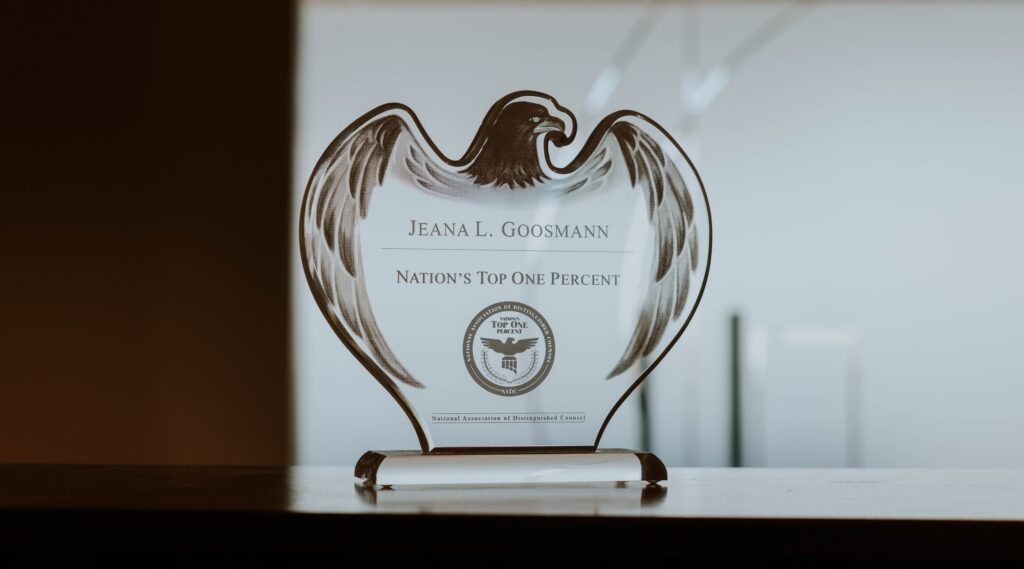
In some matters, the parties need a neutral who understands the law, the business issues, the people involved, and the practical pressure points that drive resolution. Goosmann Law Firm has attorneys available to serve as mediators and arbitrators in appropriate matters.
Our firm includes former judges, experienced litigators, trained mediators, and attorneys who serve as active members of American Arbitration Association panels. Goosmann attorneys serve as arbitrators on multiple AAA panels, including complex commercial, construction, employment, and consumer panels.
Parties, lawyers, businesses, families, and referring counsel may consider a Goosmann attorney when they need a mediator or arbitrator who can manage a difficult process, understand complex facts, and help move the matter toward a fair, efficient, and practical resolution.
Whether you need a private mediator, a private arbitrator, or an arbitrator selected through the American Arbitration Association, our team brings the judgment, preparation, and professionalism serious disputes require.
Mediation and arbitration are both forms of alternative dispute resolution, but they work very differently.

Arbitration is often required because the parties agreed to it in a contract before any dispute occurred. These arbitration clauses are common in business contracts, construction agreements, employment agreements, consumer agreements, vendor agreements, operating agreements, partnership agreements, franchise agreements, and service contracts.
In other matters, the parties may agree to arbitration after the dispute arises. They may choose arbitration because they want a private process, a faster timeline, a decision-maker with specific experience, or a more streamlined way to resolve the conflict.
Before entering arbitration, it is important to understand the rules that apply, who selects the arbitrator, what discovery is allowed, whether the decision will be binding, how costs will be handled, and whether the award may be confirmed or challenged in court.

Goosmann Law Firm represents clients before, during, and after mediation and arbitration. We help clients prepare their position, organize evidence, evaluate legal and business risk, negotiate settlement terms, and make clear decisions under pressure.
Our ADR work includes mediation strategy, arbitration strategy, AAA arbitration, private arbitration, settlement conferences, early dispute resolution, demand letters, position statements, pre-hearing briefs, witness preparation, evidence presentation, settlement agreements, arbitration awards, and post-award enforcement or challenges when appropriate.
Alternative dispute resolution may be appropriate in many types of civil, business, family, estate, employment, and construction disputes, including:

Mediation gives parties the opportunity to resolve a dispute without putting the final decision in the hands of a judge, jury, or arbitrator. The mediator helps the parties focus on the issues that matter, identify risk, test assumptions, and move toward a workable agreement.
A good mediation process is not just about compromise. It is about clarity. What are the real issues? What are the costs of continuing the fight? What risks exist if the matter does not settle? What business, family, or financial interests need to be protected?
Goosmann mediators can assist with business mediation, probate mediation, trust and estate mediation, divorce mediation, family law mediation, employment mediation, construction mediation, real estate mediation, and other civil dispute resolution matters.
Arbitration can provide a private forum for resolving disputes outside of traditional court. Depending on the contract, arbitration agreement, and rules that apply, the process may include pleadings, document exchange, witness testimony, expert testimony, legal briefing, evidentiary hearings, and a written award.
Goosmann attorneys represent clients in arbitration proceedings and also serve as arbitrators in appropriate matters. Our attorneys have experience with American Arbitration Association procedures and private arbitration processes, including complex commercial arbitration, construction arbitration, employment arbitration, and consumer arbitration.
For clients, arbitration requires careful preparation. The process may be more streamlined than court, but it still requires a clear theory of the case, organized evidence, prepared witnesses, and a strategy tied to the client’s business or personal goals.
Conflict consumes time, money, leadership attention, and emotional energy. The right ADR strategy can help you protect what matters, reduce uncertainty, and move forward with a better plan.
Whether you need counsel for mediation, representation in arbitration, or a Goosmann attorney to serve as a neutral mediator or arbitrator, our team is ready to help you evaluate the path forward.
CEO, Founding and Practicing Attorney

Partner

Partner

Partner

Of Counsel

Of Counsel

Associate

Sioux City Managing Partner

Partner

Associate
Connect with us today to speak with our Alternative Dispute Resolution legal team.
Mediation is a voluntary process where a neutral mediator helps parties reach an agreement. Arbitration is more formal and binding — the arbitrator makes a final decision after hearing evidence and arguments.
ADR is often ideal for resolving disputes quickly, privately, and at a lower cost. It’s particularly effective for business disagreements, family law matters, and probate or estate disputes.
Around 90% of criminal cases and 95% of civil cases never make it to a courtroom — so you want to make sure you have a team in your corner who knows how to negotiate the best results possible.

Whether you need to defend a judgment, challenge an adverse ruling, protect an issue after trial, or bring in appellate counsel to strengthen the strategy, our team helps clients move forward with clarity, precision, and purpose.

Goosmann Law Firm helps business owners, shareholders, members, partners, and closely held companies navigate business divorce matters with clear strategy and steady guidance.

Strategic and tactical representation in complex disputes, both in and out of the courtroom.